Property, 22 September 2026, 7 min read
Selling luxury and prestige property on the Gold Coast
The top end of the Gold Coast market plays by different rules. Fewer buyers, thinner comparable sales and higher expectations mean presentation, pricing and discretion carry more weight. Here is how I think about a prestige sale.
On this page
What makes prestige property different to sell
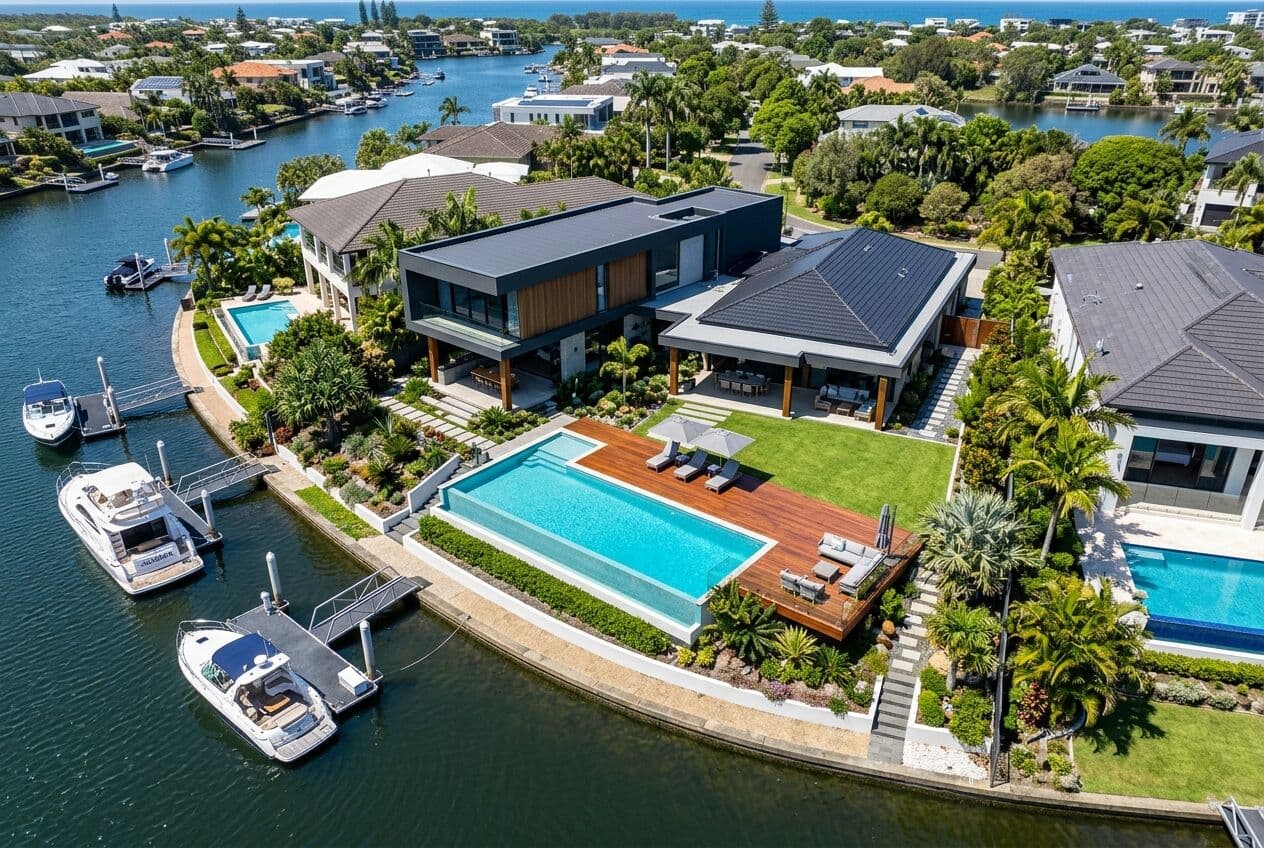
The Gold Coast has a prestige market unlike most in Australia. Waterfront homes on the canals, beachfront apartments and acreage in the hinterland all sit at the top end, and they draw buyers from across the country and overseas. Selling at that level takes a different approach to selling a typical suburban home.
Through Prestige Pinnacle Realty, I focus on high-end residential sales, exclusive sales management and advanced sales training for agents. These are the principles I think matter most. You won't find market statistics here, because every prestige property is priced and sold on its own merits.
Several things set the top end apart:
- A smaller buyer pool. At higher prices, fewer people can buy, so each serious buyer matters. Losing one through a poor inspection or slow follow-up can change the outcome of a campaign.
- Fewer comparable sales. A standard home can be priced against many recent nearby sales. A unique waterfront home might have only a handful of loosely comparable sales in a year.
- Buyers who expect more. Prestige buyers are often experienced, well advised and short on time. They expect accurate information, quick answers and privacy.
- Longer decisions. Many buyers are relocating from interstate or overseas, or buying a second home. They take their time and often bring in advisers and family.
The result is that prestige campaigns reward preparation and judgement more than volume.
Presentation: preparing a luxury home for sale
Buyers at the top end compare your home with the best they've seen anywhere, not only with the house down the street. Presentation has to meet that standard.
- Fix everything. A sticking door, a stained ceiling or a tired pool surround invites questions about what else hasn't been looked after. A pre-sale building and pest inspection helps you find and fix problems before a buyer's inspector does.
- Style with restraint. Professional styling should put the architecture, the light and the views first. Remove personal items and clutter.
- Invest in media. Use high-quality photography, video, twilight images, drone footage for waterfront or acreage homes, and accurate floor plans. Many buyers will first see the property on a screen, sometimes from another city or country.
- Document the details. The architect, the materials, the orientation, the water access and the build quality all support the price. Put them in writing so buyers and their advisers can check them.
- Prepare the paperwork. Gather plans, approvals, a pool safety certificate where one applies, and body corporate records for apartments. Queensland now requires most sellers to give buyers a disclosure statement before a contract is signed, so involve your solicitor early.
Pricing strategy for prestige property
Price is where prestige sales most often go wrong. Thin comparable sales make a figure hard to anchor, and owners understandably place a high value on what they've built or renovated.
My approach:
- Start with evidence, then apply judgement. Look at comparable sales, current competing listings, and properties that failed to sell and why. An independent valuation can help.
- Understand the buyer's alternatives. A buyer is weighing your home against others at a similar price, possibly in other cities. Price against that choice.
- Treat overpricing as a real cost. A property that sits on the market becomes known among the small circle of prestige buyers and agents. Later price reductions can signal weakness and invite lower offers.
- Choose a method that fits. Auction, private treaty with or without a published price, expressions of interest and tender each suit different properties. Expressions of interest and tender can work well for unique homes where buyers need to find the price themselves.
Queensland has specific rules on how agents can talk about price, particularly for auctions. Your agent should explain clearly what they can and can't tell buyers under the method you choose.
Timing a prestige sale
Timing matters, but it rarely matters more than preparation. Many sellers aim to launch when the weather shows the property at its best and interstate buyers are likely to visit, and there's sense in that. A well-prepared home launched at a quieter time can also face less competition from other listings.
Think about your own position as well. If you need to buy your next home, decide whether you'll sell first, buy first or negotiate a longer settlement. Each choice changes how much pressure you'll feel in a negotiation, and serious buyers can often sense that pressure.
Off-market vs public campaigns on the Gold Coast
Off-market sales are common at the prestige end. The property is offered quietly to a select group of buyers through the agent's network, without public advertising.
Advantages of selling off-market
- Privacy, with no public listing, photos or open inspection times.
- A chance to test price and interest without leaving a public record on the property portals.
- Less disruption to the household.
Disadvantages of selling off-market
- Fewer buyers see the property, which can mean less competition and a lower price.
- Results depend heavily on the depth of the agent's buyer network.
- You have less evidence that you achieved the best price available.
A public campaign reverses that trade. Premium portal listings, print, social media and targeted digital advertising reach a much wider pool, including interstate buyers, and create competitive tension. The cost is privacy.
At the top end, many buyers also use a buyer's agent to search and negotiate for them. A good selling agent builds relationships with buyers' agents, because they can bring a qualified buyer with a clear brief. Make sure your agent tells you who each buyer's agent represents and keeps you informed as talks progress.
Many sellers choose a middle path: a short private phase with qualified buyers, followed by a public launch if the right offer doesn't arrive. I think this often gives the best of both, as long as the seller agrees in advance how long the quiet phase will run and what kind of offer would end it.
Qualifying buyers and protecting your privacy
Every inspection of a prestige home takes time and carries some security risk. Qualifying buyers protects the seller and keeps the campaign focused on people who can actually buy.
A good agent will:
- Confirm a buyer's identity before a private inspection.
- Ask about the buyer's position, including whether they need to sell first, their proof of funds or finance approval, and their timeframe.
- Check foreign investment eligibility early. Foreign buyers are subject to Foreign Investment Review Board rules, and a temporary ban on foreign persons buying established homes runs from 1 April 2025 to 31 March 2027, with limited exceptions. Check the current position on the FIRB website before committing to an overseas buyer.
- Record every buyer's feedback and follow up promptly.
Discretion is a big part of the job. Many prestige sellers want privacy, and a campaign can be shaped around that:
- Leave the street address out of advertising.
- Limit photos of security features, artwork and valuables.
- Hold inspections by private appointment only.
- Use confidentiality agreements for high-profile properties or owners.
Before any inspection, remove or secure valuables and personal documents. Agree with your agent exactly what can be shared about you, your reasons for selling and your timeframe. In my view, discretion is part of the core service at this level.
Choosing and training a prestige real estate agent
Selling a prestige home well takes a set of skills that agents build over time, and training makes a real difference. That's why advanced sales training for agents is a core part of what Prestige Pinnacle Realty does.
What I look for in a prestige agent:
- Product knowledge. Construction, architecture, waterfront and canal issues, body corporate structures and the local market street by street.
- A genuine buyer network. A large database helps, but relationships with buyers, buyers' agents and other agents matter more.
- Negotiation skill. Managing multiple parties, conditions and emotions without losing a buyer.
- Honest communication. Regular reports to the seller, including feedback the seller may not want to hear.
- Professional discretion. Careful handling of personal information and private details.
Questions to ask before you sign an agency agreement:
- How will you market this property, and to whom?
- How do you qualify buyers?
- What method and price range do you recommend, and why?
- Who will actually run the inspections and the negotiations?
- How often will you report to me, and in what form?
My own property training includes a Diploma of Property and real estate licences through Connect Skills Institute. I believe agents who keep learning serve their sellers better, and the same applies to anyone running a sales team. If you're buying overseas as well as selling here, my guide to buying property in Bali and Phuket covers the rules Australians need to know.
About the author
Adrian Campbell is managing director of Prestige Pinnacle Realty, which focuses on high-end residential sales and advanced training for agents. An Australian entrepreneur based in Indonesia, he is also the founder and CEO of Kinnara, a global property marketplace. Read his biography.
This article is general information only and is not financial or legal advice.
More insights
Property18 September 2026
Buying property in Bali and Phuket: a guide for Australians
Bali and Phuket draw plenty of Australian buyers, but neither country lets foreigners buy land the way we can at home. Here is what to understand about ownership, due diligence and rentals before you commit. (7 min read)
Property11 August 2026
AI property search in Asia: what agents and buyers should know
Buying property in another country used to mean juggling portals, unverified listings and guesswork. AI is changing how buyers find property and how agents reach them across Asia. Here is a practical view from building Kinnara. (6 min read)
Leadership25 September 2026
Doing business in Indonesia: what speaking Indonesian taught me
Learning Indonesian changed how I do business in Southeast Asia. From owning a resort in Bali to property work across Southeast Asia, here is what I'd tell any Australian business owner looking north. (6 min read)